Monday, March 09, 2015

What I’m Reading Now: WHY, WHAT, and HOW of a Picture Book Study

My ReFoReMo Resources and Booklist: 
The First 10--

As mentioned in yesterday’s post, during the month of March, I’m participating with over 200 other writers/readers in ReFoReMo (Reading For Research Month). At the hosting site, blogger/author, Carrie Charley Brown, has a slew of guest bloggers with long lists of paperback book suggestions. Each day has been filled with wonderful insight and information!

But as of yesterday, Carrie challenged the participants to read at least five new picture books a day. Perfect timing! Like most writers, I need another reason to give my loved ones for why I spend hours away from them, squirreled away in corners of libraries with piles of books surrounding me. (Besides the fact that I am a book hoarder.)

Every few days, I plan to share the books that I’m reading and give some insight into WHY I chose these picture books, WHAT I found most interesting about them and HOW I think others (writers/teachers/readers) might use these books as mentor text.

The books listed here are in no specific order, but I am going to use keywords to help connect them to others throughout the month. (Theme, genre, plot, etc.)
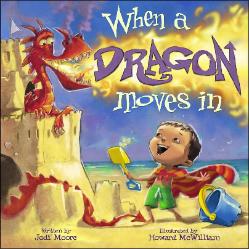

1.  WHEN A DRAGON MOVES IN by Jodie Moore. Illustrated by Howard McWilliam. 2011/Flashlight Press. 
(Picture Book/Fiction-Fantasy/2nd POV/Responsibility for Actions)

WHY: Dragons. Simple. I like books about dragons. There just aren’t enough picture books about dragons either!

WHAT: One of the best things about this book is how the author invites the reader to become a part of this story, being a “partner in crime” with the boy (pictured) as he explains what is so great about having a friendship with a dragon. The twist near the middle of the book is fantastic!

HOW: This would be a great book to look at the TWO different, yet parallel story lines. In the first half of the book, it is the boy and the dragon and their adventures; in the second half of the book, the reader is clued into the fact that the dragon may not actually exist--
This text is a great mentor text to have around if, as a writer, you are looking at ways to express the feelings of a character without “telling” everything.
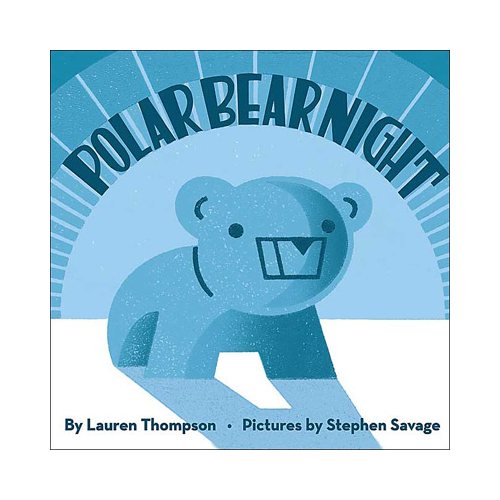
2. POLAR BEAR NIGHT by Lauren Thompson. Illustrations by Stephen Savage. 2004/Scholastic Press (Picture Book/Fiction/Nighttime-Sleeplessness-Arctic Life)

WHY: This picture book is compact in size, which makes me wonder if it was chosen purposefully to reflect the diminutive size of the MC, little Polar Bear.

WHAT: Stephen Savage has used color to reflect the mood that Lauren Thompson creates in her minimal word choices. This is a book about quiet, night, and peacefulness. It is not a loud book with clapping monkeys!

HOW: I liked analzying the sentence length and word choice in this book to look at how selective Lauren was in efforts to convey enough, but not overload the senses. By taking the text out of the images, students/writers can also create mock “blocks” of text to experiment with how the pacing of the story would be different.
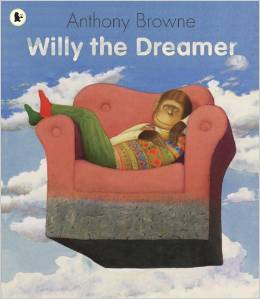
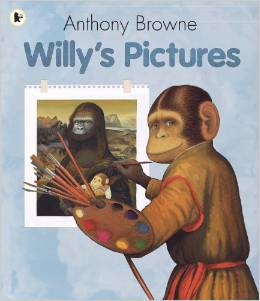
1997 This is a stunning Willy book with spectacular, surreal paintings - by one of the most acclaimed of all picture book artists. Willy loves to dream. He dreams that he's a film star, a sumo wrestler, a ballet dancer, a painter, an explorer, a famous writer, a scuba diver...Sometimes he dreams that he can't run but he can fly. He dreams he's a giant or he's tiny, a beggar or a king, in a strange landscape or all at sea. He dreams of fierce monsters and super heroes, of the past and, sometimes, the future. Willy's dreamland is a gallery of amazing and magical pictures, each one magnificently executed and packed with bananas and slyly surreal details that cannot fail to intrigue and delight. The pictures pay homage to famous paintings by the likes of Dali, Magritte and Henri Rousseau, as well as film and book characters and much more.  2000 Hugely entertaining and informative - this is a unique art history lesson given by internationally acclaimed children's book illustrator. Willy's pictures look like great works of art, but not quite...for Willy has added himself and his friends to famous paintings by Leonardo da Vinci, Raphael, Vermeer, Manet and many more. Delight in his dazzling portfolio then open the fold-out pages to see the original pictures and learn about the artists who painted them. As Willy knows, every picture tells a story...  2004 An atmospheric exploration of a child's anxiety. One night a boy is woken by a terrible sound. A storm is breaking, lightning flashing across the sky. In the morning Dad is gone and Mum doesn't seem to know when he'll be back. The next day Mum asks her son to take a cake to his sick grandma. "Don't go into the forest," she warns. "Go the long way round." But, for the first time, the boy chooses to take the path into the forest, where he meets a variety of fairy tale characters and discovers the fate of his father.
3WILLY’S PICTURES by Anthony Browne 2000/Candlewick  
4. WILLY, THE DREAMER (1997) 
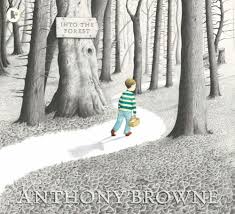
5. INTO THE FOREST by Anthony Browne 2004/Candlewick
(Picture Books/Fiction-Fantasy/3rd POV/Art-Fables-Fairy Tales-Dreams-family)

WHY: Anthony’s artwork instantly reminds me of Maurice Sendak, Chris Van Allsburg and David Wiesner’s. I’m amazed how much detail he puts into each page!

WHAT: Similar to the other illustrator/author’s I mentioned, Anthony’s layers of images are like “search and find” pages. Especially in INTO THE FOREST--The story is a twist on Little Red Riding Hood, but throughout the MC’s trip through the woods, he encounters other fairy tales. Anthony hints at these in the art work while carrying the main story of looking and longing for a missing father throughout.

HOW: WILLY’S PICTURES/WILLY’S DREAM could both be used to introduce a variety of art styles and conversations with students on aesthetics and interpretation. Whereas, I found INTO THE FOREST most interesting in storyline. As a writer, INTO THE FOREST is a great example of fracturing a fairytale.
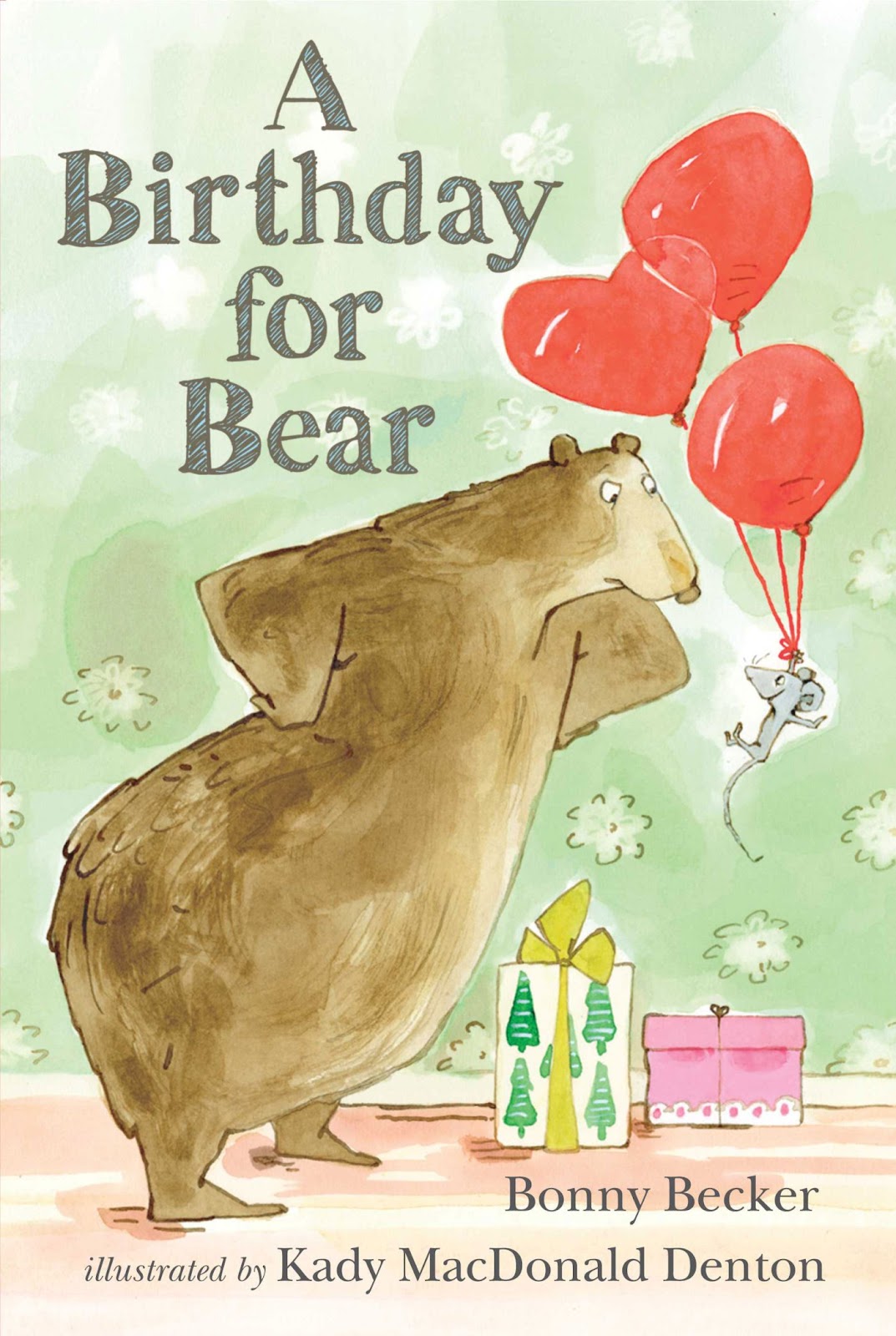
Birthday-for-Bear
6. A BIRTHDAY FOR BEAR by Bonny Becker Illustrated by Kady McDonald Denton 2009/Candlewick Press (Chapter Book/Fiction/3rd POV/Companions-Friendship-Birthdays)

WHY: I had to break the rules and pick up a easy-reader chapter book. The format of the easy-reader chapter books baffles me and I wanted to have at least one in mind to compare as I continued reading picture books this month.

WHAT: I LOVED this story! Like LITTLE ELLIOT (described below), this story is an a-typical story between unlikely friends. Bear is a grump, but also has the appealing quality of being a hard worker. Mouse is more relaxed, and obviously loves his friend. These characters are easy to fall in love with and I would revisit them in other adventures.

HOW: As a writer, this is a great place to start to look at the set-up of a beginner chapter book. The difference between the chapters is clear and evident. The plot is simple to follow and has predictability (which I’ve found most children love in read-a-louds!)
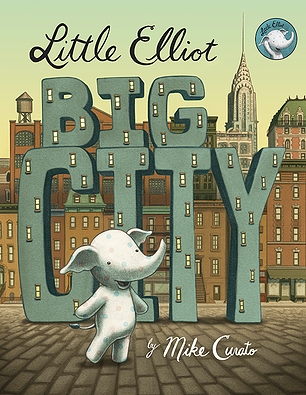

(Picture Book/Fiction/3rd POV/Companions-Friendship-Size)

WHY: Mike Curato’s Little Elliot books are hot right now! His images are winning awards and cute, little Elliot beckons the reader to take a look.

WHAT: I love how Mike develops the unlikely friendship between mouse and Elliot. To be honest, I wasn’t thinking about how traditionally mice and elephants are not friends. The story takes you past these types of stereotypical characterizations.

HOW: When I use picture books with my junior high students, characterization is a large part of our opening discussions. The Little Elliot books put elephants in a new light. Elliot is SMALL. I would start there: How can changing the concepts of what we expect about a character affect the rest of the story?
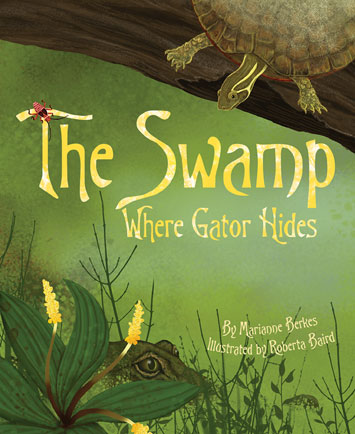
The Swamp Where Gator Hides

(Picture Book/Non-fiction/3rd POV/Swamp life-Science Biomes-Animal Habitats)

WHY: It’s NONFICTION! And it has the “House that Jack Built” structure, which I find appealing. It’s easy for children to follow, predict and at the same time, build their knowledge of various details of swamp life.

WHAT: I really loved how the end of this book was set up. Like most nonfiction books, at the end, there are fact boxes or blocks of various information connected to the main text. In many ways, this particular book set pulled information for not only the expected animals focused on in the story, but also other small details. (Which led me back to the text to see how the illustrations and story incorporated these!--Re-Readabilty that Susanna Leonard Hill shared with us during ReFoReMo!)

HOW: Besides the obvious science (STEM) connections, I found this book to be a wonderful mentor/writing text for the reasons I stated above. I will be going back to look at this one again!
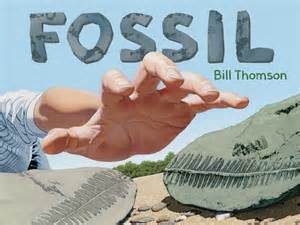

9. FOSSIL by Bill Thomson 2013/Two Lions
(Wordless Picture Book/Fiction-Fantasy/Fossils-Science-Anthropology)

WHY: Bill Thomson’s illustrations drew me in. I’m a huge fan of David Wiesner, and Bill’s style is reminiscent of David’s.

WHAT: I didn’t expect the fantasy element in this book. From the front cover, I anticipated the anthropology backdrop but as the story progressed, I found myself creating the narrative even possibly more dramatic than Bill envisioned.

HOW: Wordless picture books offer many opportunities to develop those budding writers. As a children’s writer, I find it challenging to try to recreate the pitch for this book. There is an obvious story arc and the mood is clearly defined in the expressions of both the boy and the dog characters.
Green

10. GREEN by Laura Vaccaro Seeger . 2012/Roaring Book Press
(Picture Book/Fiction/Interactive/Colors-shades/tints-botany)

WHY: This book was first introduced to me during one of my critique group “shares”. It was given as an example of simplified text, but I was intrigued and wanted to find more!

WHAT: What I found most interesting about this book goes beyond the basics of color theory and is more centered around the themes in the book. I was quite surprised to realize that this book echoes a strong ideology about stewardship of nature.

HOW:  I can see teachers in elementary classes and even upper elementary using this book beyond art lessons. With it’s nature themes it would fit in well as part of Earth Day celebrations and nonfiction botany units.

Sunday, March 08, 2015

Writing Contests, Twitter and Other Social Media: Support for Children's Book Writers Online

There is no doubt about it. I am the type of person who always functions better when my schedule is jam-packed with things to do. When my boys were little, I was teaching full-time, the scout leader for two different "dens" and part of the start-up team for the local Friends of the Library. As they grew older, my responsibilities changed but I liked to stay BUSY! I've always been a task-driving, list-making, calendar-keeping, lesson-plan kind-of person. (It's a shame, really, that I don't like to clean house.)

As a writer, I like to have a focus, such as the current WIP or the "next" big idea, but sometimes that darn writer's block can get in the way...especially when I've been trapped inside during the winter months. That's when I turn to social-media for help!

CONTESTS:
     First, many contest opportunities and open submission windows pop up at the beginning of the year. Some awards are monetary, and many others offer opportunities to query or submit first ten pages, etc. Writers might try Rate Your Story, a website that offers free feedback at various times throughout the year. 
      It can take DAYS to look into the various options out there, but having resources like WRITER'S DIGEST list of competitions and SCBWI  (Society of Children's Book Writers and Illustrators) help to point me in the right direction.

TWITTER:
     Twitter...that scary universe of tweets and favorites; re-postings and followers. I've decided I can't be afraid of messing up on my tweets anymore. Those 140 characters that I nit-picked over last year are becoming easier. I've also learned how important it is to focus only on the issues, groups and people that I'm really on Twitter for in the first place. For now, I'm following trends in children's book releases, agent/editor wish lists (#MSWL) and authors I admire. I've found that Twitter is now my first place for industry news.

A few suggestions: 
@MrSchuReads (A librarian with his finger on the pulse of Children's Literature)
@RosieRevere (Think STEM -- Science; Technology; Engineering; Mathematics!)
@EpicReads (a YA must!)
@PublishersWkly
@MacKidsBooks
@WritersDigest
@Cavewooman (me!)


FACEBOOK GROUPS and BLOG CHALLENGES:
     Finally, Facebook's newer group options and various internet blog challenges encourage writers to join in on discussions and debates from formatting and focus to characterization and word choice. I can't say enough about how much these groups motivate me to continue to write and revise on a daily basis. 
     Currently, I'm in groups with other authors, local critique groups who share up-to-date industry finds and world-wide writers like NaNo-ers. Some of these groups are open for writers of all ages and experience to join. Others are closed and limited by personal connections, recommendations, blog challenges etc. 
     The blog challenges I have participated in the past two years have both been phenomenal! Not only have the articles and inspiration posted on websites been helpful, but also the element of having groups online are encouraging and supportive. I participated in START THE YEAR OFF RIGHT-Challenge, sponsored by Shannon Abercrombie last January (Shannon took a break this year) and this year, I've joined ReFoReMo (Research for Reading Month) sponsored by Carrie Charley Brown during the month of March. You can still read the posts by the guest bloggers, but signing up for the challenge is now closed--Be sure to check back next year! 
     
In the summer, my work schedule allows me more time to participate in on-site workshops and writing retreats. But during the drab months of winter, social media and having day-to-day goals, along with hundreds of other like-minded-writers, helps keep me focused on my writing.
     
I hope these ideas give you ways to break those long-days of writer's block that you may have. I'll update my blog as new challenges and contests of interest to author's of children's books come my way. Until then, if I can help in any way, please drop me a message in the comments below. 

Keep Writing!
~Juli

Monday, July 01, 2013

“Earrings Before the Outfit” and other Habits that are Hard to Break…

I have a terrible habit and it’s a very OLD habit. In fact, it’s become my shopping “motto”.

Me, in black button earrings and
matching yellow/black plaid pants.

          When I need a new outfit, first I go find the jewelry I want to wear, and then I work it from there.
Unfortunately, this motto of mine has spilled over into my writing. But first, let me explain how this started…
I’m blaming it on the 1980s.
Shucks, I might as well place all the burden of my problems on the Deb stores. Remember those?  In the ‘80s they had the best of the fads. Stripes and dots, sugary-colored pants and shirts, dresses with big ties or bows--Sound familiar?
The problem was I couldn’t really afford every outfit I craved or “needed” to pass as a fashion-savvy teenager.
It wasn’t that I didn’t have jobs. I had money. But I wasn’t up to spending it all frivolously on frocks that I knew were going to be in one minute and out the next.
Instead, I flittered across the mall to the next place I’m going to blame—Claire’s. You know this store, with the fashionably-cheap jewelry. I can’t think of a single time I’ve been in a mall that didn’t have one of these chain stores.
At Claire’s, I could always afford a pair of earrings. ALWAYS. The earrings represented the inspiration for my next, best outfit. And thus, my motto became: If I have the right earrings, I’ll find the perfect outfit to go with them!
My motto has worked for me for decades! In fact, sometimes if I’m lucky, I can find TWO outfits to match a lovely piece of costume jewelry. (Jewelry hording is a completely separate story…)
The motto worked until now.
What started as a simple phrase became a way of thinking. If it worked to buy earrings first, maybe it would work to by the floor mats before the car? Maybe if I had the right pots/pans before I tried the recipe? And what about that story I’m writing?—Put a title down first, then write it.
See my problem?
Titles don’t work that way. In fact, I’m not sure exactly how they work. I’m completely stuck on this now and it’s tearing my entire thought process of the past 30 years to shreds!
For all my WIPs, I started my writing with a few basic things—characters, problems and working titles. In the past, this formula worked. But now, it doesn’t.
In fact I hate the working title of my current story. HATE it! But like those earrings I bought last week and then the outfit I bought to go with them, I’m having a hard time trashing it.
I’m a mental mess!
In my mind, there is the irrational fear that if I get rid of the title, my story is going to have to change somehow.  And as I’m finishing up my revisions, I know that this is probably true.
The story has changed.
As much as it feels like I’m giving up my “inspiration” for this story, I’m going to have to find a new “match” to accessorize it with.
Besides, as we all know, the outfit is always more valuable.
Writers out there, what would you do?
For me, I think it’s time to go shopping…

Friday, June 28, 2013

The Power of Music

I got the music in me…
...Well, at least it’s on my iPod (which is PRACTICALLY an extension of my hipbone or shoulder, depending where I decide to “hook” it today). And it’s a beautiful day in the Midwest. One worthy of a long morning drive in my convertible with my dog… and the radio.

First let me explain a bit. Like most people, I’m pretty easy to decode within ten minutes. I prefer the woods to water. I’m artsy. I’m a bit off-center. I don’t like being “boxed” in.

And MUSIC moves me...

Inspires me. It takes me places pictures can’t. Music can cause change. Music is powerful!

The long and winding drive this morning happened in part because a song came on the radio. If you are like me, even if you are mere seconds away from your driveway, a good song can make you rethink your stop.

The song that created that diversion today was “Same Love” by Macklamore. It’s a beautiful song.

Recently, I downloaded the entire album, The Heist, to my iTunes. But before this album, I bet there wasn’t one rap song on my playlist. (Okay, maybe “Ice-ice, Baby” but that’s only because I was in college when it came out.)

I love nearly everything on this album. It’s bouncy, it’s energetic, and for the most part, it’s about story-telling.

But from the moment I heard, “Same Love”, I knew it was part of one of my story’s playlist.

The song, for those unfamiliar, shares the story of same-sex relations. Apparently the team of Ryan Lewis and Ben Haggerty wrote the song in support of equal rights laws in Washington state.

Give or take your personal views on marriage etc., what I heard in the song was “LOVE”. Unconditional. Non-judgmental. Simple-LOVE.

Maybe it’s Mary Lambert’s soulful hook, “I can’t change. Even if I tried. Even if I wanted too.” Whatever it is, it works for my story.

The manuscript I’ve attached this song to, one that is dear to my heart, is not about gay relations. It’s about friendship. The story is about a friendship with all the trappings and complications of society. The main characters are two preteen boys and a slightly older girl from different social classes.

Essentially, the story boils down to the depths of platonic relationships. And Walla! The song, “Same Love” fits for my purposes.

There are other songs that work for my WIP too. But this is my favorite.

I’ve made playlists for each of my WIPs. I have ‘20s and ‘30s music for a historical fiction. There are e-pop songs for a dystopian manuscript.

But like most writers I know, music can be distracting to listen to while in the actual writing stage. I use music for inspiration. It’s motivational to me for times I am wrestling with those deep, internal conversations with characters and story development. Music can set the mood. It can relate and recreate a time period. It can create a specific space and place for my characters.

Are there certain songs that you use when writing? If not, perhaps it’s time to search Pandora. Plop in key words that relate to your theme, characters, or setting and see what comes up!

It might be exactly what you need to get the story rolling!

Wednesday, June 26, 2013

SUCCESS and FAILURE-- Finding Motivation in Each


Monday I shared my thoughts on strength and training. Today, Wednesday, I’m sore. Achy. I spent my Tuesday night with my typical routine and I’m taking a break between my Wednesday morning sets to write. (Muscles are tense,  but I’m going back in there!)

What’s up with that? Why do I do this to myself?

I can’t help but laugh at the thought process that is going through my mind:
“Wow, those shoulders are sore, Juli.”
“Must need to loosen them up a bit. That a.m. spinning class will help.”
“Protein?”
“Sure, I’ll fix a strawberry/banana smoothie as soon as the workout is finished. That will help.”

But what I haven’t said yet, is that even my HANDS are tight. How am I thinking I can exercise and write in the morning if one activity negates the other? Shouldn’t I give up? Ditch the writing today?

That’s when this handy little thing called MOTIVATION kicks in.  I want to write. And I want to be strong.

But it helps to have a bit of SUCCESS and FAILURE first.

Let me start with FAILURE. I’m a bit like rabbit running from a predator. I dart from one direction to the next by nature. I’ve failed at so many things I’m not even sure where to start but I’ll narrow it to three areas:

·         Sports—I stink. My coordination and focus is limited. If a stray ball comes my way, I duck.
·         Cooking—Let’s just say my best meal involves mac n’ cheese and stop at that.
·         Math—There are many reasons I married my husband. Math is on that list. (Along with hundreds of better reasons!)

Don’t get me wrong. I still DO these things. But there are so many FAILURES among these categories that I’ve nearly given up. Nearly, but not completely.

Because somewhere in there, sometime in my past, there has been SUCCESS.

·         Sports—Sure, I can’t catch, throw, or dribble a ball, but I can maintain a plank for longer than I thought possible and spin on a exercise bike with the best.
·         Cooking—I’m a fabulous reader! If I have a good recipe, I can make it happen. I make a mean stuffed mushroom appetizer!
·         Math—Geometry. I get it. I can manipulate, translate, slide and divide into symmetrical sections. My quilts have PERFECT seam allowances!

So despite my flops and flaws in specific areas of skill, the point is I still TRY. Even though my SUCCESS has at times seemed small, I have it!

Just as there are thousands of ways to look at a piece of artwork, there are thousands of ways to approach your life. You can choose to focus on the FAILURES or move forward knowing you can SUCCEED!

I could take every one of my failures and give up. If so, I would ever get near anything related to sports. If I did that, I’d miss out on the opportunity to play a pickup game of knock-out with my students at recess. Even though I lose the game early on, every time, I form a bond with them. That’s a SUCCESS not a failure.

I could completely quit cooking. I admit, I’ve come close to this one. (A kitchen can be a crafting center, right?) Yet, my boys need fresh, hot cookies. And…. Adding a bit of cheese on top of everything DOES make it taste better!

I could give up math. Na… I ‘m a writer! I have word-counts! It’s all in the way you look at things. Math as word-count goals is a challenge but I have meet 50,000+ every year for the past three years during NaNoWriMo. That is SUCCESS enough in math for me!

Essentially, it does boil down to how you want to look at your life. You can make these choices. No one else will do it for you. I want to write and I want to be strong.  I’m not going to linger on the failures. By focusing on the past successful moments, no matter how minuscule they are, I’m going to keep moving forward.

FAILURE—it happens, but take it for what it is. A moment that is now in your past.  Instead, see it as an opportunity to make something different happen. That’s when you’ll find the SUCCESS you are looking for.

Monday, June 24, 2013

Mind, Body, Soul and Spirit--I Work Out!


Waking up at 4:45 a.m. to throw on a pair of shorts, a sports tank and tennis shoes to go workout with a  boot-camp instructor (one that I love intensely because she scares the hell out of me) can test one’s personal motivation and dedication each and every day.

     Take today for instance, I set two alarms. One for 4:30; one for 4:45.

     The first alarm is purely symbolic. I will not get up at 4:30 a.m. I simply refuse. I set the first one as a reminder that the second one will be coming soon afterwards.

     Once the first alarm goes off, I start my “mantra”. The chorus to Kelly Clarkson’s “What Doesn’t Kill You” starts playing in my mind.

     Then the second alarm rings. The “stronger” part of the song is what makes me sit up. I repeat it out loud.

     I don’t know about the majority of the world, but I can’t see through the crud covering my eyes when I wake up. I trip over things, I walk into walls and by the time I have everything gathered and I am heading out the door, I feel like I’ve already had a morning workout. But I know by now that this is just the beginning. My guru, Reggie, will make us work hard! And it’s all worth been it because I can see the results. I started this journey sometime around January and I am stronger.

     Which is partially my point.

     Yesterday was the end of a weekend writing retreat. My first retreat in solitude. I have been to writing conferences, listened to speakers, critiqued and had my own work critiqued in various small groups, but I have never been to a retreat in which time was completely mine to manage. I could read, sleep, write, draw. Basically, I was the instructor of my own writing workout.

     After working a couple hours the first day with a critique group, I focused on revising a manuscript that I know has promise. Although I didn’t meet the goal I had set for myself, I was astonished at how much I accomplished.

     Recently I read an article by Jody Hedlund on her website about figuring out when you are finished revising, editing and ready to submit your work. She suggested making it through each of her five points.

     If you had asked me at this time two years ago if I could make it through that list, no way. Last year, I was getting close but I still didn’t feel strong enough.  After reading the article and coming back from writing intently all weekend, I am now ready.

     Which brings me back to my morning workouts. Writing isn’t so different than my time at the gym. Had I expected to hold a plank the first week I attended boot camp? Could I dead lift without tipping over? No. And neither was I ready as a writer to submit my work without building the strength, core confidence and revising/editing endurance that it take to get a manuscript in shape.

     In all endeavors, I believe there is a part of each of us that feeds our negative selves saying things like, “Your arms are still flabby! Straighten your pose!” and “You use to way too many adverbs!” However, we have to keep at it. Giving up, stopping in the middle, skipping our morning workouts (physical and writing) adds fuel to that furnace of self-doubt.

     I challenge you to set step-by-step goals, work towards them and don’t give up. Whether they are mental, physical, spiritual or personal goals, when you realize you can check each of those off your list as “accomplished”, you will be transformed and a stronger person for it.

Monday, July 09, 2012

Vintage Valentines and the Way I Work

By in large, a part of who I am is in what I chose to write about. I’m the kid you knew who loved the library. I’m fascinated by the past, especially what may at first seem like the intangible past. When I stumble across a detail or fact that I feel is essential in one of my historical fiction works, I want to possess it and I want to understand it thoroughly, as if I am the character, without question or doubt.

Take vintage Valentines for example.

My current work in progress pivots around Valentine’s Day in the 1920-1930s.  Most of the knowledge I get when I interview for a historical piece is second-hand accounts or, often-times, hearsay. I value every interpretation of history that I can get, but to get into my characters’ heads, I have to really understand—more!

So what’s a writer to do?

First, I research online. I remember scrolling through reels of micro-finch during my undergrad, but lucky, many pieces of history can now be found online. (Local colleges and universities still hold the “key” when it comes to their archives! Recordings done via the WPA or other grant-funded opportunities are incredible treasures!)

Another online resource I use is ebay. I don’t limit myself to the US either. Adding a “.co.uk” after “ebay” of the web address often opens up the search in amazing ways.

I’ve also used the National Archives time and again. They have photographs and sound recordings as well as documents that help to set the scene or tone of your story.

Research in general isn’t a new concept. Most writers I know are avid fact-finders.

But when my research leaves me with bigger questions and that unsatisfied feeling, I take to the streets. I go on what Julia Cameron, writer of The Artists’ Way, would call an Artist’s Date.  I don’t set my sights high and narrow my vision. I go out, hoping that what I need at the moment to get me through a stumbling block in my writing or to help a character “play” in their environment, finds its way to me.

It may be to a park, a museum, a walk through the woods, or even shopping. Getting out, away from the “search” has proved to be my way through when I’ve become neurotic over the little things.

That’s what happened with the Valentines. I wasn’t really looking for them, but they found me.

Vintage valentines are all over the internet. (I have many of them “pinned” on a board on my Pinterest page.) Some of the Victorian era cards pop open. My mother has many of these matted and displayed in her house. But I needed something else.

About a month ago, when I was on one of my “writer’s retreats”, I decided to wander through a local antique store that I had always brushed aside. In the past, I had found this particular store had too much ‘70s and not enough of what I really considered “antique”.

But the cards found me.

The curator of this particular booth had bundled Zip-lock baggies of cards, prints, postcards and coloring books together in a random collection and stuck them all in a wicker basket under a bench on the floor. Thank goodness I have a habit of looking on the ground for pennies! The first bag I grabbed held the gold mine I needed.

What is it about these cards that make them different than the ones I found online? I’m not completely sure, but I’d bet it has a lot to do with the physical connection. They smell, they have a texture, there is a fading message and signature that almost has a life of its own.

They aren’t exactly the cards I pictured when I wrote the Valentine’s Day scene, but they are the cards that took me there to write it.


Sunday, July 31, 2011

The Coliseum Ballroom- after the fire.
Setting: The Coliseum Ballroom
And all the Would've/Could've/Should'ves...


Last night, an icon of the local setting and feel of Benld, Illinois and Route 66, the Coliseum Ballroom, was lost in a devastating fire. I couldn't help but cry. In my current WIP, the Coliseum is the focal point of the backdrop where key plot events take place. It's the hub! It's where the all the action is!...and now the building is lost.

Historically, and more particularly, during the 1920s, the setting of my story, the Coliseum functioned as a ballroom, a roller-rink and a venue for a multitude of other “events”. During my lifetime, it has been a part-time dance hall/part-time antique shop. The Coliseum has been a landmark for travelers and patrons for almost a century and even those numbers showed up at her end, 16 fire departments in all, to try to keep the fire contained.


As a writer, I have regrets. I watched the fire, and I thought about my characters and all the would've/could've/should've's that are now lost to me. I couldn’t help but feel what it would be like for Will, my main character, who spends his Saturday evenings parking cars for the wealthier patrons during “Big-Band” nights. I imagined Ted, the rambunctious brother, standing in my very shoes, quiet for a change, watching the fire and knowing that part of their town, part of the soul of the citizens would be lost along with the building. While I sympathize with  those in the crowd tonight, who have such strong, similar memories, I am comforted to know that for them as well as for my characters, the Coliseum will forever remain. And every time I look at my story, every time my characters need to be there, it will still be there…in the story, for my reader.

During the past two years, I’ve collected facts for this particular manuscript of mine. For the scenes that involve the Coliseum, I have focused on gathering a sense of the building. I've poured over pictures and flyers. I've hovered around the outside of the building, looking at where the doors and windows had been before the last "remodel". When I've gone inside (posing as a typical antique-store groupie), I let my mind wander. I imagined the wood floor emptied of knick-knacks and the balcony filled with guys and dolls giggling, making light conversation as they waited to hear music fill the large hall. I touched walls, walked up stairs, snuck around corners. I listened.

I wish I had visited more. I wish I would have taken more pictures. I could have sat down and written chapters and pages in the very spot I envisioned my characters. I should have dug deeper. But I didn’t. I guess, in a way, I took it for granted that it would be there tomorrow. Now, the beloved Coliseum lay smoldering under the sprays from a dozen or so fire-engines.

My concrete, fact-finding opportunities are now gone; my first-hand accounts and personal connections have been severed. But as a community member, I know that even though the building may be gone, it will be forever preserved in memories and stories. This is one of the reasons why I write!

I encourage all of you to share your stories of your communities, buildings, places, events, and history with one another. Don't let treasures like these become lost.

With sad regret and a heavy heart, I will forever miss our Coliseum Ballroom.
With Writer's Regrets....

Saturday, January 15, 2011

Go Ahead!
...Jump Into a Few of These Good Books:
                         (All these books were new (or almost new) in 2010)


Larry Gets Lost in Chicago Illustrated by John Skewes, Written by Michael Mullin and John Skewes. ( Sasquatch Books, 2010)
Suggested ages: 4-8 Accelerated Reader Reading Level: 3.3 / 32 pages.
http://www.larrygetslost.com
http://retrodyne.blogspot.com/
This is my first Larry book, and I love it! Apparently, Larry, a lovable pooch, has been to SanFrancisco, Seattle, NewYork…and the list goes on. Unbenounced to Pete, Larry’s human, while “lost”, the dog finds as many fancinating things about Chicago as Pete and his family do. Even with older children in my family, we all enjoyed the sights Skewes and Mullin highlight in the book. Next time we visit another big city, I’ll look up another Larry book to place alongside my RandMcNally.


13 Words by Lemony Snicket, Illustrated by Maira Kalman. (HarperCollins, 2010)
Suggested ages 4-8. Accelerated Reader Reading Level: no test available. 40 pages.
http://www.lemonysnicket.com/
Seuss was challenged to write a book using 50 words. Snicket created a picture book based on 13. Given, he interjected a cachophony of other nouns and adjectives (such as my favorite, “spiffy”) to jazz the story up, but essentially, it is merely 13 words. Imagine a list of random words. Then challenge yourself to create a story around it. That is what Snicket has done. Although I’m not sure that the story commands enough adventure for an upper grade reader, I’m sure that any logophile, word lover, will find this on their shelf.


Crow Call by Lois Lowry, Illustrated by Bagram Ibatoulline. (Scholastic Press, 2009)Suggested Ages 4-8. Accelerated Reader Reading Level: 3.8 / 32 pages.http://www.loislowry.com/
I know this was released last year and therefore, doesn’t have a place on this list, but I couldn’t pass it up. The artist, Bagram Ibatoulline, has created an ambiance that matches Ms. Lowry’s writing perfectly. The serenity and love that passes between my Lowry’s character (herself?) and her father are comforting, and yet at the same time, somber in the memories of lost time. It would easily fit into my junior high curriculum as a tone piece to match that of Gary Soto’s short story, Stop the Sun.

Edgar Allan’s Official Crime Investigation Notebook by Mary Amato (Holiday House, 2010)
Suggested ages 7-10. Accelerated Reader Reading Level: 4.3 / 140 pages.
http://www.maryamato.com/
As a teacher of 8th grade students, I often forget what it was like to be in 5th grade. That is, I forgot, until I read this book. The main character, Edgar, mimics my very own 11-year-old attempts of solving a rash of local petty crimes! This eagerly reluctant hero journals, spies, and is incredibly jealous of his know-it-all classmates. And yet, behind it all, as the mystery deepens, Edgar finds out what is really at the heart of it all. Friendships and poetry. I love Mary’s “teacher” sensibilities mixed with her “writer” pulse. She has successfully created a fabulous stand-alone, an entertaining read-aloud, and a suitable teacher’s-companion text within this one great story.


Out of My Mind by Sharon Draper. (Atheneum Books, 2010)
Suggested ages 9-12. Accelerated Reader Reading Level: 4.3 / 304 pages.
http://sharondraper.com/
Sharon Draper has been one of my favorite writers for years now. She hasn’t let me down with Out of My Mind, a first-person narrative plucked from the mind of the protagonist, Melody, who feels trapped inside herself due Cerebral palsy. I caught myself replaying time and again, the things I have said alongside the things I haven’t. To save me, Sharon lays it all out there for us to consider. Melody’s real-world idol, Stephen Hawking, should be proud of Ms. Draper’s work. The story works for two reasons. One, Melody’s voice is resounding. Despite the lack of “phonetics” associated with her voice in the character’s world, we, the readers, hear her loud and clear. Secondly, happy endings are hard to come by. It would have been too easy for Ms. Draper to give us a simple smile, pat on the back, and send Melody and the reader off to a fairytale end. In real life, we’re not so comfortable with each other’s problems. And these are issues we must all confront.


Fat Vampire: A Never-Coming of Age Story by Adam Rex (Balzer and Bray, 2010)Suggested ages : Young Adult. Accelerated Reader Reading Level: not yet available. 336 pages.
http://adamrex.com/fatvampire.com/
Vampires always seem to have it so good. That is, unless you are turned while you are still in that awkward teenage stage. Unfortunately, the main character of this story has to fight his social battles while dealing with his newly acquired vampire urges and quirks (or in some cases, perks). I loved the mix of the reality T.V. vampire hunters and the team of teen friends that add to this fun, and not-so-romantic vampire book. Definitely a teen-read though.

Thursday, December 09, 2010

January 2011 is around the Corner!...New Goals!

The month of November is now a fleeting memory. December wrapped it within a deep chill and tucked me inside along with a full calendar of activities and festivities.

HOWEVER...the writing must occur!

Brenda Ferber, a fellow SCBWI member, recently challenged her blog readers to pick up a daily goal (writing a few pages a day, working on a new hobby, etc.) and to maintain that goal for 365 days. A full year. Yep, a full year. She has a fabulously inspiring story that accompanies her challenge. (You can read it at: http://brendaferber.blogspot.com/)

Thing is, I agree with her. We all need to take a challenge, to set ourselves a goal, and to work hard (sometimes it definitely will be hard) towards meeting that goal.

After completing the ever-daunting demands of meeting the NANOWRIMO (1667+ words a day), I have realized that it can be done. There are so many wonderful things to get out of working hard towards a personal goal!

For instance, when it comes to making writing your goal, here’s what I’ve discovered:

1. That story, you know the one, that has been floating around, taunting you day after day—well, you can finally give it the time and space it needs to calm down. Putting the words on to paper are like trapping a wild animal. (At least it seems that way at times!) The truly marvelous part of it though, is that the animal will change. What may have started out a hungry, carnivorous T-Rex, can end up being a sweet, fluffy bunny. And what joy! As a writer, you get to decide if you still like it or not.

2. Writing every day gives you that freedom to become distracted. Maybe you don’t have a topic to focus on. So what? I’ve found that writing about the mundane can often become the little seeds I need in a story I write later on.

3. It doesn’t take long before you feel that you are actually a writer. I mean, really a writer. One that writes. Every day.

I save my files daily and label them by date. During NANOWRIMO, my files were labeled like this: Nanowrimo 11122010. Subject, month, day, year. Simple and yet still a huge chunk in a writing folder!

My notebooks (for my “old-fashion” writing) has always been the same. Date in the corner.

Another kudo once you are a REAL writer…and you have been writing DAILY…you can buy new pens. Nice pens. And no one will question why you dropped $10-20 on a pen.

4. When you finish, when you are overcoming your goals, the next hurdle doesn’t seem so impossible. For me, it was the NANOWRIMO 50,000 mark. I’ve written middle grade manuscripts before, but never 50,000 in a month. That seemed nuts. Seemed. Now, I know I will do it again and again. With 50,000 words or more in a month, maybe 100,000 words or more per manuscript, I feel more comfortable and confident than ever! For once, I can cut/trim/edit without so much apprehension. I have options. I have alternate scenes and story lines. It like the Clue movie. I can choose which ending is the absolute best!

All I have to do now is decide what my personal goal will be. The 50K was too big for me during the school months. (I have to keep teaching to pay the big bills.) But 25,000 or 1000 a day doesn’t seem too far from possible. I’ll give it some more thought and let you know by next week! Meanwhile, check out Brenda’s site and think about setting a goal for yourself. Good luck!

Sunday, November 14, 2010

NPR-Three-Minute Fiction Contest--LOSER! and still smiling...

The contest is over; I didn't win. But in a way, I did.

I am an avid contestant. I fill out forms, I complete tasks, and I enjoy the game.
However, the "typical" me is shy and critical when it comes to actually submitting something to be "judged". See? Isn't that a harsh word?
But this time, I accepted the challenge, whole-heartedly. And I didn't win.
However, I'm totally okay with it. In fact, I loved it. It had rules I could follow and presented a challenge I enjoyed.

The story requirements were that it was a mere-600 words or less and began with "Some people swore that the house was haunted..." and end with "...nothing was ever the same again after that." Curious?

Here is my entry from the most recent NPR Three-Minute Fiction contest:

A Snowballs Chance...

Some people swore that the house was haunted. My wife, for one, felt that it was Snowball’s spirit that scratched at the door each night. My daughter swore that the dirt piled near the flowerbed could only be the “Ghost of Snowball” returning to her old habits. Even the neighbors, who hadn’t heard the news, called to complain about the mess left in their yard.


But after Snowball’s mysterious disappearance, I was the only one who had tended to our Bichon Frise’s remains, who had trudged, heavy-hearted, to Foster Road, who had gently nudged the small dog’s white, life-less body into the empty box and then, the one who had dug the hole deep enough to ensure that no intruders would disturb her endless slumber. Yet days after the event, some people still wouldn’t let go.

“Daddy, you can’t take away Snowball’s house now,” my daughter pleaded, her eyes welling with tears. “Where will he go to sleep after his busy nights?”

How do you explain to a five-year-old that death is forever? How do I tell her that all dogs chase squirrels in trees during the wee-hours of the morning and bark at the full moon in the middle of the night? Who but a furry friend could offer the same sense of security from all things that go bump in the night? I, too, was at a loss.

So, as with most issues in our house, it was unanimous. My wife and daughter agreed. The dog house would stay. At least, until Snowball’s spirit found rest.

During the first week following the dog’s death, I was mowing the yard and found one of Snowball’s favorite toys, a squeaky frog. I had almost missed it hiding in the tall grass. Then, the memories snuck in. I recalled that first day. My girls had returned from an “adventure” with a “surprise”. Snowball had been so small, barely any larger than the toy itself. I remembered how I laughed as I watched my toddler chase after the little fluff of a creature. But Snowball was more than that.

I brushed a tear from my eye. “Dang allergies,” I muttered to myself.

Despite the small expanse of enclosed space, I found more of Snowball’s “favorites”; a worn-out tennis ball, a rubberize fire-hydrant, and oddly, a bone. I picked each up, tossed them onto the porch and then promptly forgot about them.

The next morning as I left for work, I remembered the pile of toys. The bone was gone. At that moment, unlike the rest of my family, I knew that what was haunting us was not the spirit of Snowball, but more likely, a bothersome stray.

I spent the rest of my day planning my ghost hunting strategy. I would buy a motion-detecting light with a camera attachment, a no-kill trap, and an easy-to-apply muzzle. I could sense the “Ghost of Snowball” business nearing its end.

The clerk at the hardware store noticed the excitement, perhaps over-excitement, in my purchases.

“Got raccoons?” she asked, smiling.

“Nope, I’m conducting a paranormal investigation.” I smiled back and winked. Problem solved. I scooped up the bag and grabbed the cage. I had walked not two feet when I was stopped.

The orange wall in front of me was marred by a single stand-out image.

I set down the cage and moved closer.

Staring out at me, beady eyes and all, was a Bichon Frise. “MISSING! LAST SEEN A WEEK AGO RUNNING DOWN FOSTER ROAD….” I scanned the flyer, “…Casper”.

I had already buried the ghost.

Nothing was ever the same again after that.

Thursday, November 04, 2010

Word Count, Deadlines, Plot Ninjas! Oh MY!
I am officially Nanowrimo-ing and thus, I am excusing myself from feeling guilty about my blog....
In my "absence", I plan to:
1. meet my daily word count goals
2. assist my student writers by staying positive and helping them meet their goals
3. not use writing as an excuse for avoiding the dirty dishes piled near the sink.
(I will instead use schoolwork as the excuse for the dishes.)

My head is full, my eyes are tired and my wrists are beginning to feel the pain of swollen joints. Thus...
...until I have completed this journey...
ZZZzzzzzzz zzzzz

Thursday, October 07, 2010

Writing Challenges- I Gotta’ Plan

I'm excited! I have a personal obstacle to overcome, a writing challenge to meet and at the same time, a teaching goal to set.

"What is it Juli?" you ask.

I'm going to participate in the NaNoWriMo (National Novel Writing Month) this year!
But oh, no! That's not all! I'm going to challenge my students to participate with me as well! I'm setting up the challenge using the teen site and the teacher resources. My hope is to have 5-10 students (out of 80) commit to writing and occasionally meeting at lunch during the month of November. I envision the students and I discussing our challenges and sharing our stories as they progress.

After being stuck in a rut for the past few weeks, feeling like havoc has been swirling about me--blocking me from moving in any direction--I am ready to take on this challenge. 50,000 words? Ha! Bring it on!

Think about it: thirty days (has November). 50,000/30= about 1700 words a day. With the help of Dr. Wicked's Writing Lab this can be done in a snap! I could write 850 words in the morning (in 30 minutes without seeing red) and another 850 in the evening. I'm starting to really see this...THEN! I can officially declare December as, get ready--CaNoReMo (Caveny's Novel Revising Month!)

Are you going to take the challenge? Sign-up at http://nanowrimo.org or http://ywp.nanowrimo.org today! and start having completed manuscript dreams again!

November is going to be an exciting month!

Saturday, September 25, 2010


My dog, Xavier, whose pesky characteristics
could launch an entire series!
 Characters: Animals/Pets

As my students and I watched My Dog Skip during class this past Friday, I prepared them, didn't give the world away, but answered the question they feared most, "Does the dog die?"

"Yes, eventually, all dogs die," I replied, "but, didn't you watch the Disney movie All Dogs Go to Heaven?"

Now for junior high students, the wonderful thing is that the majority of them had seen All Dogs Go to Heaven and they do still watch Disney movies on occasion. Thankfully, the voice of comfort that a sad ol' Disney movie can bring, was enough to make my worried little charges calm down. That is, almost.

"Mrs. Caveny, obviously, you never met my dog," one student piped up, "there's no way he went to heaven."

I smiled. I understood what the student meant. Some dogs, well, some dogs follow difficult paths. I turned to her and added, "But did you love him?"

The student looked up at me. Her eyes were sad. Ya, they did. And that right there folks, is why Disney and animal-story writers in the world today win every time. We do love those pets, regardless.

Take The Incredible Journey*, by Sheila Burnford, for example, one of my favorite animal books-made-into-a-movie. Sure you love Shadow, but you also love Sassy. Why? She's rotten. Ask anyone who has ever had a Siamese cat. They know. Siamese are independent and full of arrogance. But despite Sassy's faults we love her.

In Winn-Dixie, by Kate DiCamillo, one can't help but to fall for the awkward mutt with the snarky smile. He's flawed, and up against a character that feels flawed to some extent herself; he's her perfect match.

So is it the dependence we are attracted too? Is it the unconditional love? Do we love these animals because of some need they fulfill in the character's heart? I believe it is all this exactly...and more.

When I write about the animals that have shared my life, they have each touched upon different aspects of myself. Kitty, the golden mutt--companionship; Oscar, (and later Sophie), both canaries--joy and peacefulness; Sam, the bossy Siamese-- stability; Max, the white zoom-a-roo, Spitz-a-poo,-- mothering, and currently, Xavier, the insane Cattle dog-- understanding. (Note: Xavier is currently "in-the-dog-house" for misbehavior/overzealousness--a daily thing.)

I guess that whatever breed they are, whatever traits they themselves possess, animals will always win in a story. Ultimately, they move from being the "vehicle" that reveal a main character's traits, to being one of the main character themselves.

Which animal/pet/friend from your life complements or suggests a characteristic of yourself? Have you written about them lately?

P.s. *The Incredible Journey is the original book for the movie Homeward Bound, the Incredible Journey. 

Wednesday, September 22, 2010

For the Love of the Language- Favorite Lines

Today I was suckered into reading a book that was suggested by a student of mine. She promised it would be worth my time, and although I was reluctant, I did truly believe that she loved the book. "How bad could it be then?" I convinced myself.

I started reading it during our sustained-reading time and found that the book was, at least, interesting. It made it's way into my backpack, and then, into my home, were it sat on the sofa-table. By 9:00, I had read a few more chapters.

The book, PEEPS, by Scott Westerfeld is (by no surprise) a vampire-themed story like the other 70% of my students' current choices. Although I'm not thoroughly convinced of the story yet, I am in love with the language.

If you have never read Scott Westerfeld, you might at least recognize his name from the incredibly popular YA series he recently concluded: The Uglies, The Pretties, The Specials and The Extras. Most of his stories are futuristic fantasies which blend teenage internal conflicts with the societal chaos of slightly stranger, new worlds.

Despite my reluctance to dig into another vampire story, I can't get out of this book! Westerfeld is fun and creative. He feeds the teacher in me with great context clues surrounding strange new words. He builds bridges between his details, setting me up for some mystery he'll reveal bit by bit. He uses fabulous figurative language and often carries it on for a paragraph or even an entire page! He's sometimes a bit trite, and that's o.k. too. Truth is, I've been suckered in to this book by the language.

Early on in the book,Westerfeld main character, Cal states, "The bruises on my chest were still throbbing, and my ribs were knitting back together in an itchy way." Perfect! (I'm borrowing that one next week as an example for the class.) It's that LANGUAGE that keeps me reading. I want more. I crave more.

Heck, I'm a special breed of vampire, maybe I'll even write about it: Vampires that crave fanciful words, witty phrases and creative figurative language!

Do you have a favorite line or a great passage that should be shared? Post it!

Saturday, September 18, 2010

Personal Writing: A Community of Writers
During the past few weeks I have felt more and more akin to one of my favorite characters, Alice, as I, too, have found myself lost in a rabbit-hole of sorts. My blog has suffered, my soul needs "fed" and my notebook is calling me. And that is why, today, I made a point to scupt out some of that "valuable" time to meet up with a community of writers (in this case, teacher-writers).

Regardless of our professions or trade, being among a community of writers is an essential part of a writing life. This particular group that I met with today are all past participants in the Piasa Bluffs Writing Project (a subsidery of the National Writing Project). We're all teachers of one level of students or another, and we have all experienced the joys and trials of teaching writing as well as experienced the value of our own personal writing.

Unlike my Society of Children's Book Writers and Illustrators (SCBWI) critique group, this NWP group uses the majority of time together to sit quietly and write to reflect. Where the SCBWI group provides guiding and critical advice while presenting new personal challenges, the NWP group gives me a chance to delve into my "metaconsciousness" and find out what really makes me tick (or in the more recent case, what causes my "tick" to become stuck) as a teacher of writing and a writer.

Both groups are vital to my growth. Both groups are places, spaces, and "aces" that provide support and feedback for my writing soul. I encourage those who do not have one of these supports to find a group. Whether it's a partner in crime that will sit alongside while you write and lend an ear to listen, or a large group that serves as your sounding board that you can bounce those gems of your writing out upon, find one. I know that I would be at a loss without my writing groups.

Thanks SCBWI and PBWP partners!

Monday, August 30, 2010

IDEAS: Deadlines, Jobs and Goals

Monday, already? Where did the time go? What happened to my promise, "every-other day or so--at least"? I knew when I initially wrote that, that there would be a time when that might be a problem. But I wanted to at least have a goal in mind, even if it was only a self-imposed "DEADLINE".

So what is the big deal will goals and deadlines anyway? On Facebook, my writing friends stress about their writing deadlines. Many of them use a daily journal so that when they aren't working on their manuscripts, at least they're writing. Some are working on "assignments" from their agents or publishers. Whether it's personal or professional these deadlines are constants in their lives.

My friends that teach have Monday through Friday deadlines--lesson plans, copies, research, grades. Often these deadlines overlap into the personal deadlines of Saturday and Sunday jobs.

And then there is that word: JOBS. (That sneaky, little five-letter word...teeheehee.) Are deadlines only part of jobs and professional lives or do we try and slide them in as part of our personal lives as well? I believe that this may be the root of all deadline-related stress. We have pushed ourselves to be a corporate-world machine. In this JOB, day-to-day living, we have imposed DEADLINES on even the most mundane and simplest of things. "I must finish the laundry on Saturday, by noon." "My car's oil needs checked on Thursday evening, or else it will not get done." When, in reality, if we simply think of these as GOALS instead, the stress of missing them wouldn't be as terrible.

So I didn't post any writing last Wednesday or Thursday as I had planned, but my GOAL is to write. I want to write more, share more, and create a personal and professional place for my writing.

Whew! That feels better already.