Showing posts with label autobiography. Show all posts

Monday, March 23, 2015

What I'm Reading Now: Books #71-80 (Autobiographies/Biographies)

The picture books I’ve chosen for #71-80 of my ReFoReMo Picture Book Reading Challenge are all autobiographies or biographies. Some may be more “creative” narratives than traditional nonfiction, but regardless, they are all filled with personality and voice.
Enjoy! ~Juli
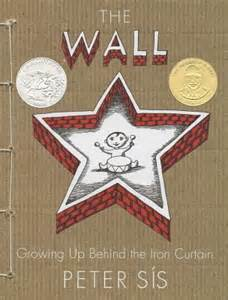

71. THE WALL by Peter Sis 2007 Frances Foster Books 
(Non-fiction/Autobiographical//PB/3rd POV/History- Cold War- Czechoslovakia-Berlin Wall)

WHY: Peter Sis has been a favorite author/illustrator of mine for years. When I taught 6th grade, I included his books in an author study unit. This one is quite different though.

WHAT: This autobiography is unique in that Peter Sis tells his story in 3rd person point of voice. By flipping the narration, it separates the reader from the author, allowing us to view his story a more of a history text than a personal journey.

HOW: There are many things to learn from this book as a mentor text.
1. With our own memoirs, explore what happens when we distance ourselves from the story. How does changing perspectives affect our stories?
2. Explore the history that you as a writer are most engaged in growing up. How has the historical context around you affected your narratives? Dig into this concept. Make a timeline if needed and look at the forces that have surrounded you and contribute to you as the writer/reader/teacher/student that you are today.
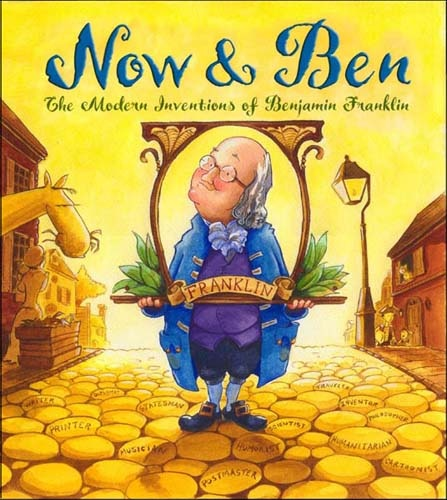
72. NOW AND BEN by Gene Barretta 2006 Henry Holt and Co.
(Creative NF/3rd POV/past-present-Benjamin Franklin-inventions)

WHY: What a catchy title! Not every topic lends itself to the convenience of a rhyme, but it takes a creative writer to find one and utilize it!

WHAT: With that creative title, Gene has found a perfect formula for comparing inventions that we take for granted now and those that Ben discovered hundreds of years ago! The left pages explain what we have in our world/society that the right hand page (Ben) invented.

HOW: This is a great opportunity to play with names and titles. Although Gene Barretta makes it seem like the story and form came to him easily, like all great things, I’m sure it wasn’t that simple. Titles are a great place to “play” with words. In this case, the title really sets the rest of the book. Making a running list of potential subjects and titles might just lead to a discovery that unfolds into a new story for you too!

73. BENNY GOODMAN AND TEDDY WILSON by Lesa Cline-Ransome Illustrated by James Ransome  2014 Holiday House (NF/Biography/PB/3rd POV/jazz-1920-30s-integration)

WHY: Another jazz-themed picture book for me, please! I love them!

WHAT: BENNY GOODMAN AND TEDDY WILSON is a wonderful example of why I love books about jazz musicians so much. There is an innate demand for the text of a book about musicians to have a melody, rhythm or sense of sound in the structure of text. Lesa conveys this through her use of onomatopoeia and poetic lyricism.

HOW: You should not read a book like this quietly, alone. Books with sound techniques in writing MUST be read out loud. Ask students to listen to the musical qualities. Then play a few of the musical pieces for them as well. How do they compare? (This is a big Common Core Standards type of question, by the way.) As a writer, how can I bring music or a specific sound to my writing? Onomatopoeia is one technique, but there are others: repetition, short vs long phrasing, rhyme, alliteration…
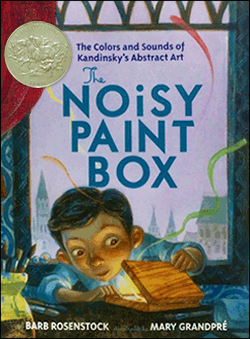

74. THE NOISY PAINT BOX by Barb Rosenstock Illustrated by Mary Grandpre 2014 Alfred A. Knopf (Narrative Nonfiction/PB/3rd POV/Vasily Kandinsky-art-inspiration-synthesia)

WHY: I truly enjoy the subjects that Barb Rosenstock writes. From Theodore Roosevelt to Louise Smith, she knows her subjects and is able to pinpoint exactly what it is about them that makes their lives “tick” for the reader.

WHAT: As I read this book again, a few things clicked that I specifically noted and liked. In the beginning (but not throughout) Barb uses a repetitive structure (similar to BEFORE JOHN WAS A JAZZ GIANT) and then within two full pages, hits the reader with the singular pivotal point in Vasily’s life: he is given a paintbox. From that point forward, the story changes, much like his life does.

HOW: I would really like to look at my research subjects in this same way. Is there a point, a singular moment in life when everything changes? If so, how can I use this point to change the pace of my writing?
75. MANFISH by Jennifer Berne Illustrated by Eric Puybaret 2008 Chronicle Books
(NF/Biography/PB/3rd POV/Jacques Cousteau-underwater-discovery-diving)

WHY: I remember as a child being fascinated by Jacques Cousteau films. Little did I realize that I was part of the audience he was directing his movie for.

WHAT: MANFISH is packed with facts. It’s not necessarily a lyrical or creative nonfiction read, but it is informative. Sometimes, a subject needs this much coverage.

HOW: One of the many questions I keep asking myself as I read for this challenge is how do I want to approach my next subject? With the millions of picture books mentors, there is no one right answer. MANFISH is a great example of this. While many of the other books I’ve showcased have rhyme or repetition, this one doesn’t. But it covers everything a child would need to know about Mr. Cousteau in a mere 1225 words.
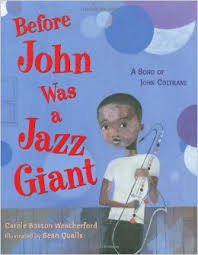

76. BEFORE JOHN WAS A JAZZ GIANT by Carole Boston Weatherford Illustrated by Sean Qualls 2008 Henry Holt Books (NF/Biography/3rd POV/John Coltrane-jazz-music)

WHY: There are a cool dozen or so picture books about jazz on the shelves now. I really want to read them all!

WHAT: I like how Carole utilizes what my students and I call magic three--a series of three words, phrases or sentences for effect. She begins with “BEFORE John was a jazz giant…” and then uses a series to complete the sentence. The last two stanzas in the book change the pattern. Then, at the climax, she focuses on one event. This is where Carole adds ONE extra line. Then as the action in the plot falls, she concludes with only one memorable sentence to sum everything up. It’s wonderful!

HOW: As I mentioned, this book would be a great companion along with all the other fabulous jazz-themed books on the market today. How do different writers approach similar subjects? For the most part, the books I’ve read have focused on the musical talents and interest of the subjects as young children and trace their growth and emergence into the great musicians we recognize. I would be remiss not to mention Sean Qualls’ wonderful artwork. His paintings create sound and music themselves.
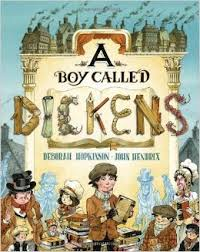

77. A BOY CALLED DICKENS by Deborah Hopkinson Illustrated by John Hendrix 2012 Schwartz & Wade Books (Creative-nonfiction-narrative/PB/Biography/3rd Person (But breaks the 4th wall)/Charles Dickens-London 1800s-writing inspiration)

WHY: With my 7th grade, traditionally, we read an abridged play version of A CHRISTMAS CAROL each year. I’m always looking for new ways to incorporate other reading along with our unit.

WHAT: Deborah Hopkinson must like Charles Dickens as much as I do. She’s focused on the points from Dickens’ stories that are most memorable and recognizable. At each stage in the young Dickens’ life, she interrupts or adds to the story the creative connections between the author, Dickens’ and his stories.

HOW: Of course, my first reaction is how I will use this in my classroom. I will have my students draw the parallels between Dickens’ life and the setting and lives of characters in A CHRISTMAS CAROL. As a mentor text, this reminds me of other books in this set I’ve read. Many of these stories have backdrops, settings, historical markers, that are significant contributions to the change and growth of the character. Look for these parallels in the subjects you research for nonfiction text.
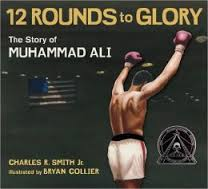

78. 12 ROUNDS TO GLORY: THE STORY OF MUHAMMAD ALI by Charles R. Smith JR. Illustrated by Bryan Collier 2007 Candlewick Press
(NF/Biography/PB/2nd POV/rap-poetry-Muhammad Ali-boxing-Vietnam controversy)

WHY: As part of my 7th grade unit on leaders, I introduce Muhammad Ali and my students have often written their own raps to summarize their learning. That’s essentially what Charles R. Smith has done with this book.

WHAT: I love, love, love the sound of this book. It would take nearly an hour to read the entire book out loud, but it’s definitely worth it to read a chapter or two so that you can get the full sense of the beauty that the author has created. Muhammad Ali was well known for his quick rhyme. This book builds on that.

HOW: So much of what I’ve read the past few days has led me to an understanding of the use of the subject’s own voice, whether it’s an artistic voice, a musical voice, or a voice representative of the time and culture. As a writer, it’s clear, we have to use that voice, capture a bit of it, and slip it across to our readers in a way that makes it clear without losing the story. With Muhammad Ali, I have watched and listened to recordings of him. With Josephine Baker (see the next entry) I’ve watched clips of her in motion. Lesson: study everything about your subject. Everything.
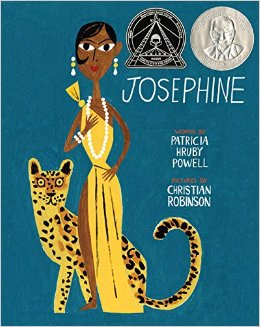
79. JOSEPHINE by Patricia Hruby Powell Illustrated by Christian Robinson 2014 Chronicle Books (NF/Biography/PB/3rd POV/Josephine Baker-racism-fame)

WHY: Patricia is a talented author. She has a great passion for research and her hard work shows in her books.

WHAT: This is not a kindergarten through third picture book. This is a picture book for older readers. There are so many aspects of interest about this book (I’m glad I own it; I can keep looking back without having to check it out!). One feature I like are Patricia’s use of direct quotes. They ground the writing and focus the narrative. I also thoroughly enjoy her use of adjectives or invented nouns. Sprinkled throughout the text are hyphenated modifiers and strings of words (like the pearls on the cover…) that give a distinctive mood and voice to the story.

HOW: These creative and often original word choices are purposeful. There’s no measured point where one is added and then another, but they are used to regain the focus and continue the mood throughout the text. Is the mood or voice unclear or indistinct in your writing? Try adding a bit of flare and flavor by time-period specific words or colloquialisms and idioms.

80. HOUDINI by Kathleen Krull Illustrated by Eric Velasquez 2005 Walker & Company
(nonfiction/biography/PB/3rd POV/Harry Houdini-magic acts)

WHY: Kathleen Krull writes many nonfiction biographies that I’ve enjoyed reading during this “challenge”. Her subjects are often different and fill a vacancy or need on the shelves.

WHAT: This particular text, HOUDINI, is wordy and full of background in a typical 3rd person, expository way. However, what works about the book are the frequent interruptions to the story told in an announcer “voice” as if we, the reader, are part of the audience at one of Houdini’s magic shows.

HOW: I can’t help but think about other ways to draw the reader into the time period or events in a subject’s life as if we are there with them, side by side. It becomes a bit of time-traveling, and is especially effective in this combination of different POVs that Kathleen has used.

Wednesday, March 18, 2015

What I'm Reading Now: Books #51-60 (Uniquely Different)

For the rest of my contribution to the ReFoReMo Picture Book Challenge (2015), I’m going to be picky. While there are other books I’m reading, I want to start narrowing my focus.

The books I’ve chosen for today’s post are all UNIQUELY different in one way or another. Maybe it’s the story, maybe the subject, and possibly it’s the overall design. Regardless, these are the ten books that are currently in my stack of reading that are UNIQUE.
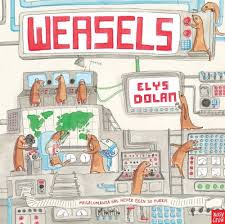
51.WEASELS by Elys Dolan 2014 Candlewick Press
(PB/3rd POV/twisted facts-weasels-humor)

WHY: One of my friends had a ferret when we were little. I hated that thing. (I have pet rodents, so it’s not a species problem...it was this particular ferret I disliked.) Any book that twists facts and makes something that I don’t find interesting--somehow interesting again, is a winner! (And besides…everyone knows what WEASELS are like!)

WHAT: Right from the first page, the reader realizes this book is different.
                             “Weasels. What do you think they do all day?”
From that point forward, Elys questions everything we believe we know about weasels and proceeds to twist it around. (Weasels are quite ingenious!)

HOW: Taking the ordinary and questioning everything about it to the point of the absurd creates humor. This mentor text is a great example of that. Try listing ten things you know about a subject… as Elys as done, in questions. Then answer them. But allow your answers to be ridiculous!

ADDITIONALLY: My 13 year old and husband loved this book!


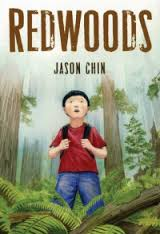
52. REDWOODS by Jason Chin 2009 Flashpoint
(NF/PB/3rd POV/wordless narrative pb-forestation-Redwoods)

WHY: Creative approaches to nonfiction catch my attention and Jason Chin is only getting better! (See author link or his newest book, GRAVITY for more info.)

WHAT: On the text only level, this is a straightforward, bare bones nonfiction text covering the essential information about Redwoods. Or so it seems. Add the illustrations and another story layer evolves. Jason is smart by combining the two levels. Separately, they are unique. Together, they tell another story, a narrative fantasy story.

HOW: It might be wise to start with the illustrations alone. Think of it as a wordless picture book. Tell the story out loud. Plot is there, characters, conflict. Then toss in the text. Notice how the two match and at what point the story changes. I can’t wait to get my hands on a few other of Jason Chin’s books to investigate this unique pairing!

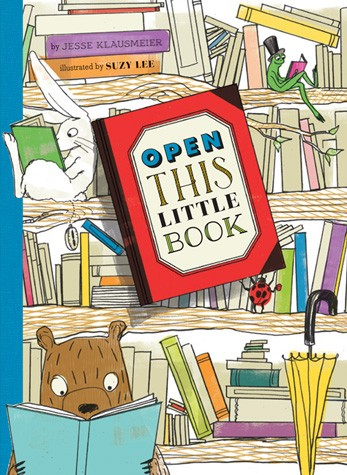
53. OPEN THIS LITTLE BOOK by Jesse Klausmeier illustrated by Suzy Lee 2013 Chronicle Books (PB/3rd POV/Unique structure-interactive-colors-size)

WHY: OPEN THIS LITTLE BOOK and the gimmick of the “little books” sucks you in! Little hands will love this!

WHAT: Beyond the 3-D design of turning each “little book” as they get smaller and smaller, I love the repetitive structure and how by getting smaller, the conflict gets bigger.

HOW: Backward and forward. Think about how a simple narrative can change when you tell it from the end to the beginning. As much as I was captivated by opening and unveiling each step toward smaller and smaller books, I was thrilled to read from middle to end (by story structure- in reverse-- from the climax to the original inciting incident). Play around with this concept. Forward and backward or backward to forward?

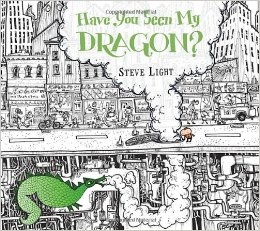
54. HAVE YOU SEEN MY DRAGON? by Steve Light 2014 Candlewick Press
(PB/1st POV/Dragons-New York-Maps)

WHY: There is something about picture books with limited color. It’s like when I choose to take black and white photos. The subject in image becomes obvious (or in the case of this book--hidden.)

WHAT: I love the journey the MC takes throughout Manhattan to find his dragon. Similar to the next book, A WALK IN LONDON, the central story revolves around discovery of a new surrounding. But each book is told in very different ways.

HOW: As a mentor text, I can’t help but think how my stories would be different if I let the story be led by another character (other than the MC). For instance, it is the dragon that we are really following as he leads us around to key points of interest. The MC is searching for him. (And as the title suggests, so is the reader…) Steve Light was tricky with this one.

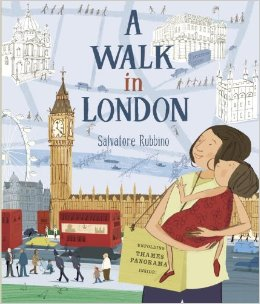
55. A WALK IN LONDON by Salvatore Rubbino 2011 Candlewick Press
(PB/Ist POV/travel-London-facts)

WHY: Like many, I love to travel, but I’m limited in funds. Relaying on books to take me places, even as a child, I found that I can learn quite a bit from any good book to take me there.

WHAT: Such an enjoyable book! It’s perfect for the curious and fact-driven child (and adult). Although the plot is minimal: a child is visiting London for the first time with a parent, the entire book is set up like one of my favorite dictionaries, RICHARD SCARRY'S STORYBOOK DICTIONARY. The character’s walk you through while various points of interest and facts are labeled throughout the book.

HOW: I’m thrilled to post that there are MORE of these wonderful books by Mr. Rubbino! Paris and New York are the two other destination books in this series. As a writer, pick up one. It’s a historian’s dream! I envision ways to write many nonfiction books using this design. As a teacher, these books would make a great addition to any geography or travel unit. (I also would recommend reading these if you plan on writing a story that is set in any of these locations.)

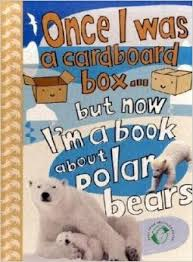
56. ONCE I WAS A CARDBOARD BOX...BUT NOW I’M A BOOK ABOUT POLAR BEARS! by Anton Poitier Illustrated by Melvyn Evans 2009 Tony Potter Publishing
(NF/3rd POV/Polar Bears-Global warming-recycling)

WHY: Again, a title drew me in! While I was perusing the shelves of my local library, I hesitated when I read this title and said, “How?” That one little question made me pull the book off the shelf and read it at that very moment. I think as writers, that’s what we all want of our books. Not just the re-readability that is desired, but also that sense of immediacy from our audience that calls out to them, coaxing them to open the book from the beginning.

WHAT: Bare-bones--This straightforward nonfiction book is about polar bears. It is complete with a table of contents, subheadings etc. What makes it unique and punch that extra “ohhh" factor is the inclusion of a sidebar on each right hand page that explains what happens to cardboard boxes when they are recycled. The really “tight” part of all this is how they come together on the last page: Global Warming. Ah, ha! See?

HOW: Again, that ability of a title to make me want to pull it off the shelf makes this book automatically make it on my list of “Catchy Titles”. The text is a mix of expository writing mixed with narrative (the polar bears on each page “talk” to the reader) and argument (from the introduction about cardboard to the last page about the connection). classrooms could use this book to identify the differences. Writers should use this text as a mentor in innovation and design. It’s definitely an idea that is “out of the box”!

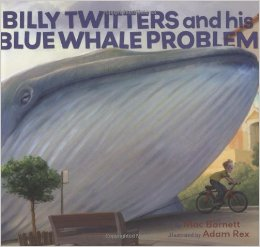
57.BILLY TWITTERS AND HIS BLUEWHALE PROBLEM by Mac Barnett Illustrated by Adam Rex 2009 Disney/Hyperion Books (PB/creative NF/1st POV/Whales-humor-responsibility)

WHY: Whales are fascinating. I’m sure as a book lover, one could think of dozens of whale-themed books without even glancing at Google. Combine a hot topic with innovative story by Mac Barnett and the wonderful images by Adam Rex = success!

WHAT: The genius behind this story is the narration. Dialogue is key! Mac has completely convinced me that this is a story but all the while, he drops fantastic facts into the narration through dialogue and dilemma. Genius at work!

HOW: As a writer who loves a great story but is attracted to all things Nonfiction, this is an amazing find. While a straight-forward nonfiction text packs facts in tightly like an abridged encyclopedia, this text slips them in sideways but leaves the reader feeling like somehow we now know MORE than we would otherwise. It would be helpful to me as I continue to study this text, to place clear transparencies over the pages and mark where the nonfiction elements are compared to the narration to analyze the structure further. (I’ll post my process and progress when I do!)

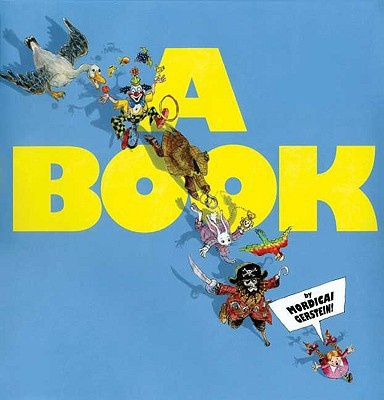
58. A BOOK by Mordicai Gerstein 2009 Roaring Brook Press
(PB/3rd POV/story elements-perspective[visual and written]-genre studies)

WHY: I’m very familiar with Mordicai Gerstein, the artist, but I can’t remember reading a book like this by him before. I was curious to see what A BOOK would actually be about.

WHAT: What I soon realized is that A BOOK is about what a book is… the story, the genre, the perspective, the conflict etc.There are slightly over 1200 words but the pace is quick. The various characters add to the explanation of what a book is in dialog so that the MC (a little girl) becomes the reader, following along.

HOW: As a teacher, A BOOK would be a great opening for a unit on narrative writing. There is so much to pull from: genre, dialogue, character etc. As a writer, it offers a new way to look at our subjects. Mordecai was smart to illustrate the book from a bird’s eye perspective to give that “looking into” feel that drags us in. He also uses dialogue and questions to interact with the reader. What are other ways that writers can draw the reader into the book without relying solely on illustration?
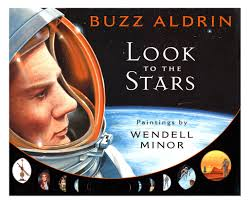
59. LOOK TO THE STARS by Buzz Aldrin. Paintings by Wendell Minor 2009 G. P. Putnam’s Sons (NF/1st POV/Space travel-history-autobiographical)

WHY: From the time I was little, I’ve wanted to be a scientist for NASA. (Obstacles I couldn’t overcome at the time blocked my path, but I was able to teach units on space travel for nearly 10 years!)

WHAT: I found this book interesting in that the author is in many ways, writing an autobiographical account. The book is set up as a nonfiction with the subject of space travel, but since it is told in 1st person perspective, the reader has insight into Mr. Aldrin’s personal experiences and opinions.

HOW: This would be an excellent choice for older students to study how to incorporated personal stories with nonfiction. Experience is a great teacher!

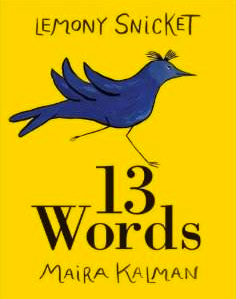
60. 13 WORDS by Lemony Snicket. Illustrated by Maira Kalman 2010 Harper Collins
(PB/3rd POV/context clues-word choices)

WHY: I love the strangeness of this book. I have read 13 WORDS before--many times. It confuses me and at the same time, impresses me. I love challenges.

WHAT: The incredibly delicious thing about this story is that it is created around a building of words that are introduced one page at a time, adding to the contextual meanings and solidifying the plot. It makes me wonder (and I’ve met Daniel Handler before...I should have asked), was the story written FIRST as a narrative and then taken apart word by word as if walking backwards in your tracks?

HOW: As I have posted before, I think it would be a fun writing challenge to come up with a list of random words and create a complete story around it. My friends and I often play a shorter versions of this, “Napkin Poetry” (our name for our twist on the classic exquisite corpse writing exercise), but to create a full-fledged narrative plot would truly be a challenge.

Other books from the ReFoReMo Challenge that I have also read:
MY TEACHER IS A MONSTER! by Peter Brown
POWER DOWN, LITTLE ROBOT by Anna Staniszewski Illustrated by Tim Zeltner
THE DAY THE CRAYONS QUIT by Drew Daywalt Illustrated by Oliver Jeffers
EXTRA YARN by Mac Barnett Illustrated by Jon Klassen
SHARK vs. TRAIN by Chris Barton Illustrated by Tom Lichtenheld